
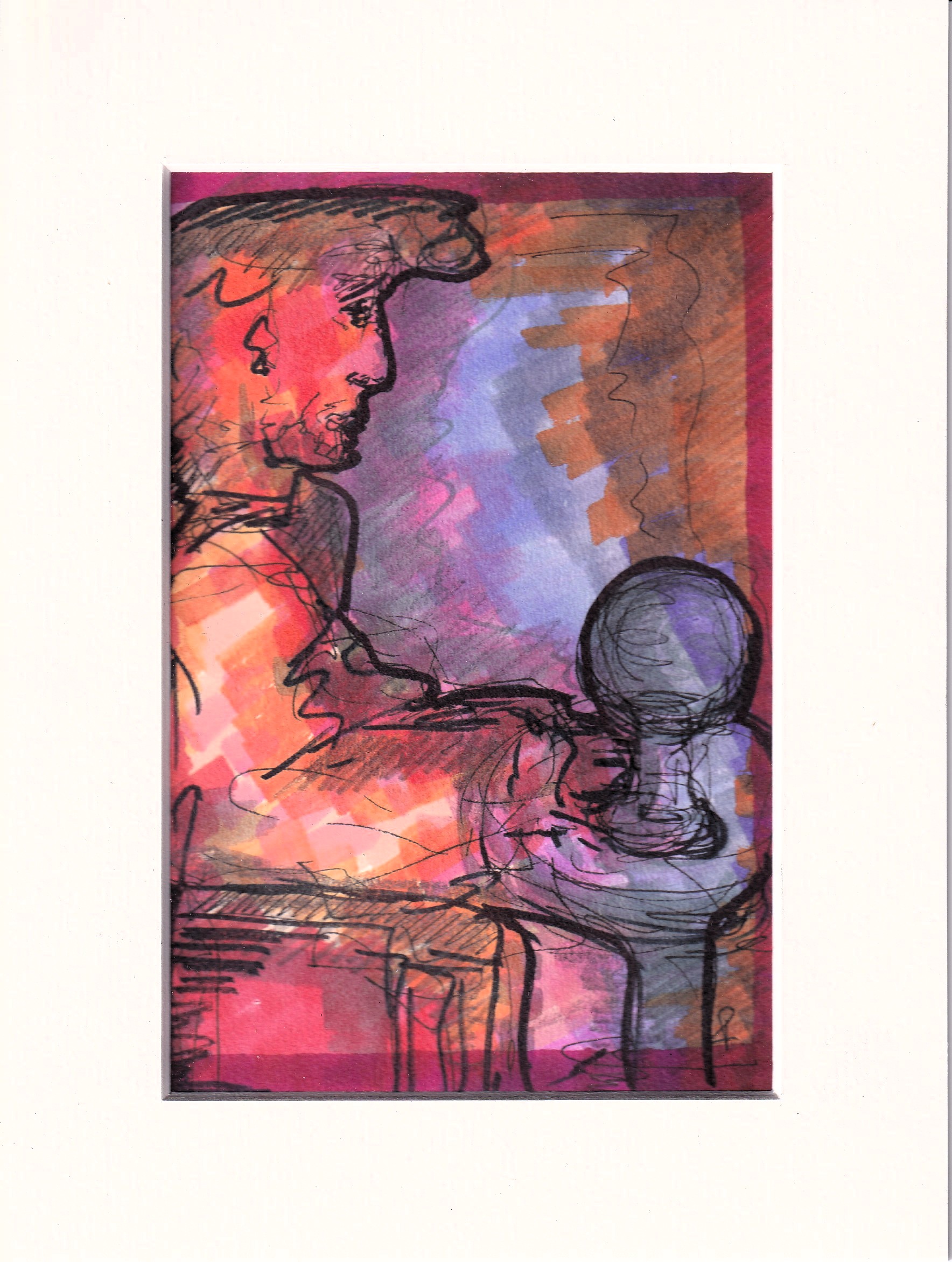
Let’s read AI with Butler as a machine for performing norms: labels and benchmarks don’t just find identities; they iteratively make some lives legible and leave others precarious. The task is not only to de-bias but to trouble the grids that script who can appear at all (Butler 1990; 1993).
Butler’s theory of gender as performativity teaches me to study how categories are citational—repeated acts that harden into “truth.” In AI, dataset labels (“toxicity,” “male/female,” “risk”), benchmark tasks, and moderation policies function as such citational acts: they normalize some performances and abject others (Butler 1990; 1993).
Five Butlerian lenses for AI
1) Performativity of labels. Classification is not neutral description but norm iteration. To ask whether a model is “accurate” is also to ask which performances it makes recognisable as persons (Butler 1990; 2004).
2) Speech acts & injury. Content policy and moderation stage a politics of the performative: words can wound, and platforms decide when speech counts as harm and how repair is enacted (Butler 1997).
3) Precarity & grievability. Systems distribute whose lives are protected, seen, and mourned—through ranking, safety, and resource allocation. Butler’s question—whose life becomes grievable?—turns into audits of visibility and remedy (Butler 2009; 2004).
4) Undoing norms. “Undoing gender” means designing for non-coercive recognition rather than forcing binaries; AI should widen recognizability instead of policing it (Butler 2004).
5) Assembly & counter-publics. Platforms are stages where bodies assemble and become audible; interface and policy can enable or inhibit collective address and solidarity (Butler 2015).
Three applications
Gender detection & biometrics. Butler would reject binary “gender-from-face/voice” pipelines as norm enforcement masquerading as measurement; a just design deprecates such tasks or requires explicit, revocable self-identification (Butler 1993; 2004).
Content moderation. “Hate/harassment” taxonomies are performative boundaries; legitimacy grows when affected groups shape categories and when repair (appeal, context review) is real, not cosmetic (Butler 1997).
Public information & crisis feeds. Frames decide whose suffering surfaces; audits should test whose speech and needs become visible, and create counter-datasets to rebalance grievability (Butler 2009; 2004).
A Butler-inspired toolkit (practical)
- Category dossier: For each label, document purpose, alternatives, harms, and appeal routes; include a “recognizability” note (who can appear?).
- Performativity probes: Run A/B tests that vary naming schemes and inputs to observe how categories stabilize or fray.
- Precarity check: Report outcomes by impacted groups; pair metrics with remedy data (time to reversal, compensation).
- Binary-pressure review: Remove forced choices; allow free-text/self-description with privacy safeguards.
- Assembly design: Build features for collective address—explanatory notices, counterspeech tools, participatory policy edits (Butler 2015).
Guiding questions
- Which identities can the system recognise without harm—and who remains unintelligible?
- When does “safety” become erasure, and what visible paths to repair exist?
- Where can norms be undone so more people can appear and speak?
- What does “Doing Gender” mean with regard to AI white male biases?
Literature
Butler, J. (1990). Gender Trouble: Feminism and the Subversion of Identity. Routledge. Publisher link.
Butler, J. (1993). Bodies That Matter: On the Discursive Limits of Sex. Routledge. Publisher link.
Butler, J. (1997). Excitable Speech: A Politics of the Performative. Routledge. Publisher link.
Butler, J. (2004). Undoing Gender. Routledge. Publisher link.
Butler, J. (2009/2016). Frames of War: When Is Life Grievable? Verso. Publisher link.
Butler, J. (2004/2020). Precarious Life: The Powers of Mourning and Violence. Verso. Publisher link.
Butler, J. (2015). Notes Toward a Performative Theory of Assembly. Harvard University Press. Publisher link.
Leave a Reply to Series Introduction: “What Would s*he say about AI & Society?” – Sociology of AICancel reply